Two Silver Airships — Two Different Battles With Physics
Sceye SE2 and Kelluu both made headlines this week. Both silver, both lighter than air. But comparing them is like comparing a moped and a Boeing 747 just because both have engines.
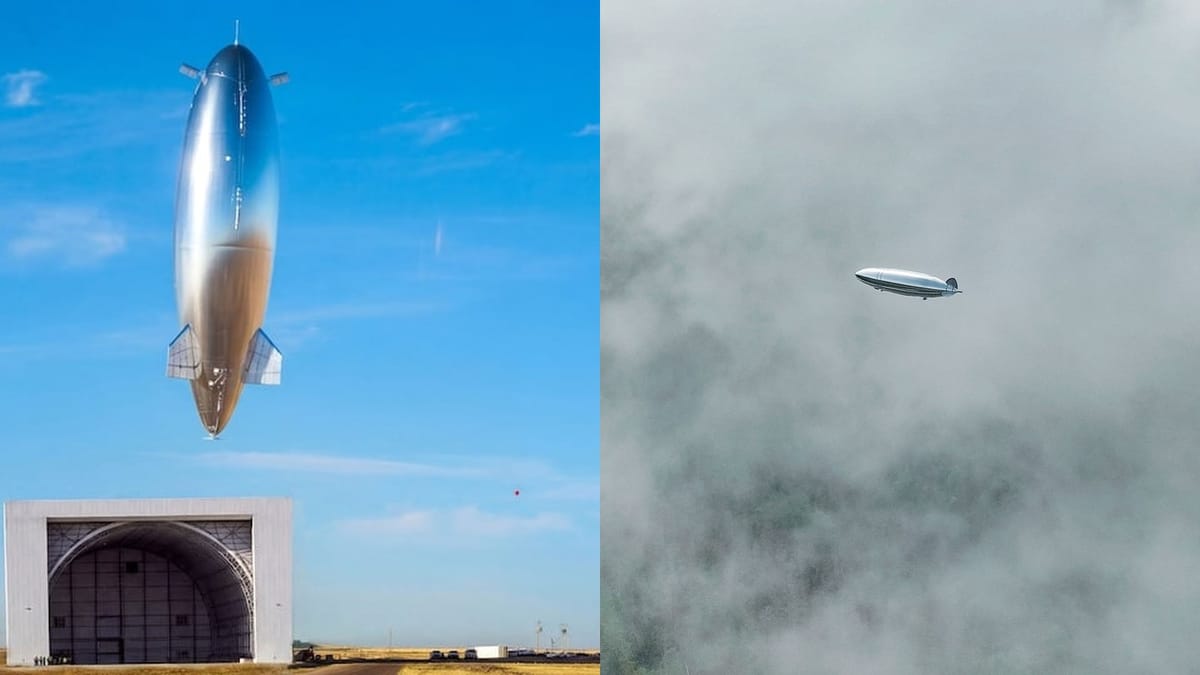
This week brought two airship headlines that look similar at first glance: both silver, both lighter than air, both positioned as the ISR or connectivity platforms of the future. But comparing them is a bit like comparing a moped and a Boeing 747 just because both have engines.
Sceye SE2: Stratospheric Internet for 12 Days
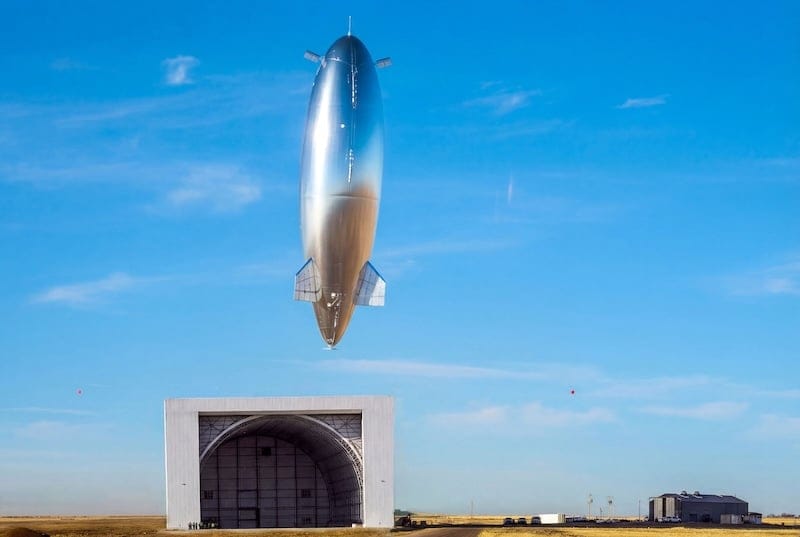
In March 2026, American startup Sceye completed a 12-day mission over Brazil. Their SE2 — an 82-meter solar-powered airship — held an altitude above 52,000 feet (roughly 16 km) while staying within one kilometer of its hover point the entire time. That's the stratosphere: above the clouds, above turbulence, above drones and most air defense systems.
The SE2 is a HAPS — a High-Altitude Platform System. Its mission isn't surveillance but connectivity. On board is the SceyeCELL antenna, which beams a broadband cellular signal hundreds of kilometers down to the ground. Think of it as a geostationary satellite, only 20 times closer to Earth and thousands of times cheaper to deploy. The aircraft runs on solar panels and lithium-sulfur batteries (425 Wh/kg — roughly twice the energy density of most commercial cells). Next up: a commercial test flight in Japan this summer with SoftBank, focused on backhaul connectivity.
Kelluu: Arctic Scout at One Kilometer
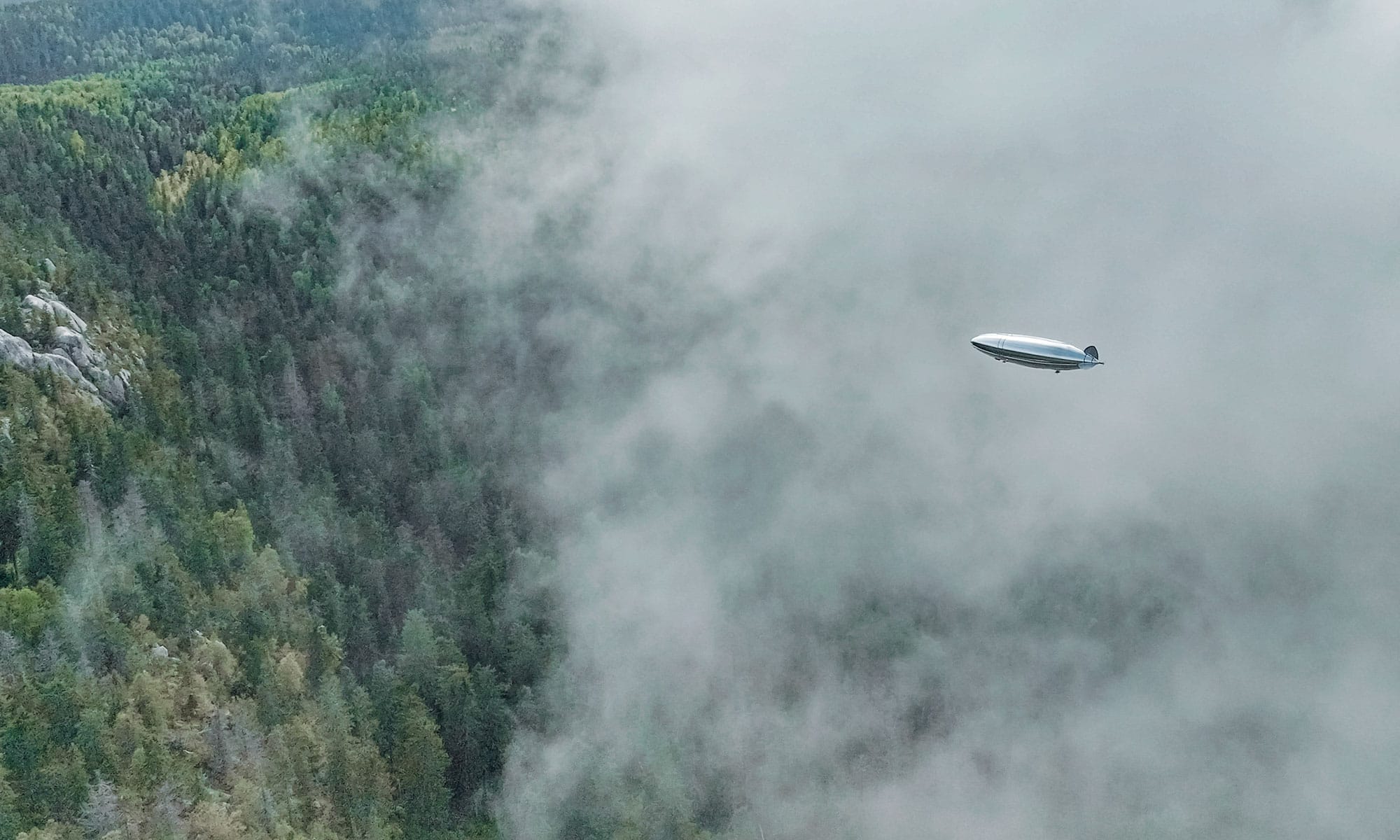
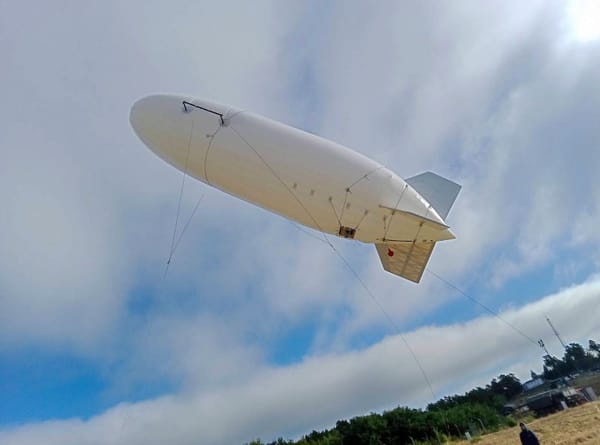
Finnish startup Kelluu this week closed a €15M Series A led by the NATO Innovation Fund — the fund's first investment in Finland. Kelluu is doing something fundamentally different: a small tactical airship for ISR, flying at 1–2 km altitude with 12-hour endurance (the next generation promises multi-day flights).
The platform is pitched for surveillance on NATO's eastern flank and in the Arctic — environments where quadcopters freeze and manned reconnaissance aircraft are too expensive for persistent patrol. Kelluu has participated in roughly 12 NATO exercises, about half of them in arctic conditions. Real-time data sharing with Palantir's Maven Smart System was confirmed during Exercise Steadfast Dart 26.
What's the Difference — and Why It Matters
Altitude isn't just a number. It's different physics, a different mission, and a different adversary.
Kelluu operates in the tactical space: below 2 km, visible to everything around it, vulnerable to small-arms fire and MANPADS — but cheap, mobile, and effective enough for border patrol or target designation. It's a tool for the field commander.
Sceye operates in the stratosphere, where there is no weather, no drones, and no short-range air defense. From there, a single aircraft can serve an area 500+ km across — simultaneously. It's a strategic-level tool: giving armies connectivity where there are no towers, no satellite coverage, and no possibility of laying cable.
Both platforms answer the same question — how do you stay airborne for a long time at low cost — but at different altitudes and for entirely different customers.
Relevance to Ukraine
Kelluu isn't suited for Ukraine, and the issue goes beyond flight endurance. The fundamental problem with small airships is physics: the smaller the platform, the worse it holds position in wind. Field conditions over open terrain regularly produce 30–60 km/h winds — and that's precisely when operations intensify and a small airship is forced to land or drift. The mechanics behind this are explained in detail here. Kelluu is well-suited for predictable Arctic NATO exercises. For a dynamic front line — it isn't.
Sceye is an entirely different conversation. If the SE2 could maintain stationkeeping at our latitudes — and stratospheric winds over Central Europe are significantly more complex than over tropical Brazil, where the test was conducted — it would be transformative for Ukrainian communications. A single aircraft over neutral airspace could provide secured broadband connectivity for the entire theater of operations: no ground infrastructure, beyond the reach of most strike systems, around the clock. That is the HAPS mission in a sentence: not to look down, but to keep the sky open for those below.