Notable Aerostat Incidents Around the World

Incident 01 Shot Down by Missiles 1981
"Fat Albert" and the Lobster Fishermen of Florida
📍 Cudjoe Key, Florida, USA · August 1981
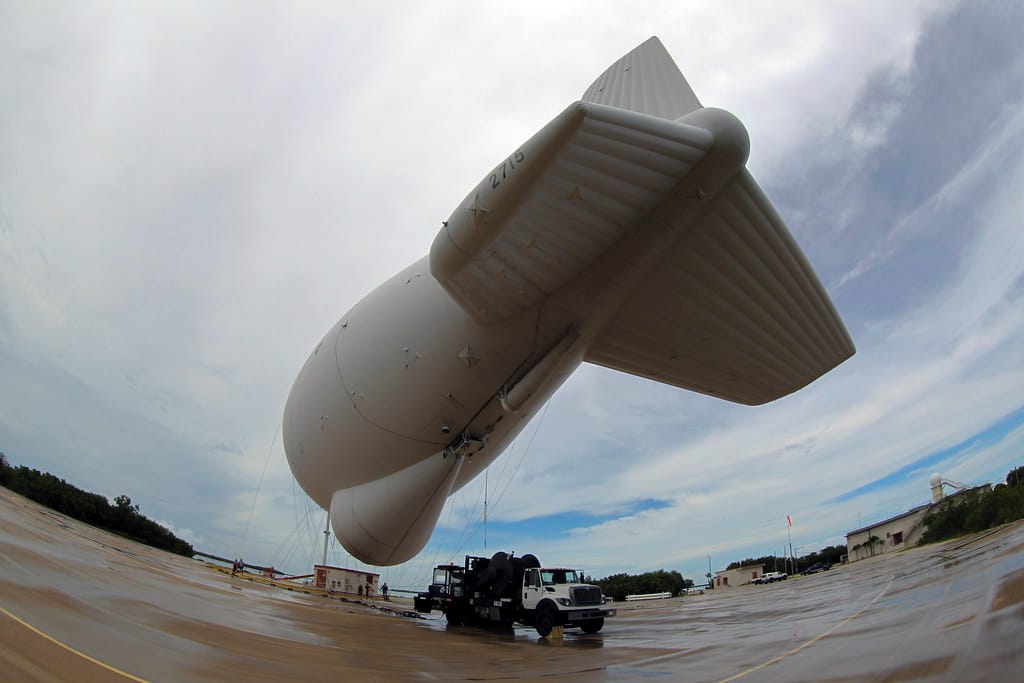
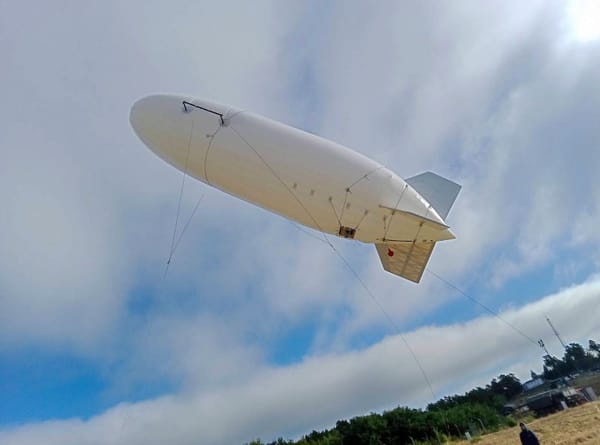
The TARS aerostat over Cudjoe Key — the one locals nicknamed "Fat Albert." Photo: U.S. Customs and Border Protection
It started as a routine descent ahead of an approaching storm. But something went wrong — "Fat Albert," a 53-meter helium aerostat of the TARS (Tethered Aerostat Radar System) program, broke free from its tether and began drifting uncontrolled over the Florida Keys.
Four lobster fishermen on a 23-foot boat decided to help the Air Force and tried to lasso the runaway balloon. They succeeded — briefly. For a few seconds, the boat and its 175-horsepower engine were lifted into the air before the fishermen were thrown into the water near the Mud Keys.
To stop the runaway multi-million-dollar aerostat, the Air Force scrambled F-4 Phantom jets and shot it down with air-to-air missiles over the ocean.$4Min lossesF-4Phantom, missiles fired4fishermen survived
The TARS program wasn't shut down — the aerostat was replaced. "Fat Albert" kept watch over Cudjoe Key for over 30 more years and was only retired in 2019.
Incident 02 Uncontrolled Drift 1991
100 Miles Over the Everglades Swamps
📍 Cudjoe Key → Everglades National Park, Florida, USA · January 1991
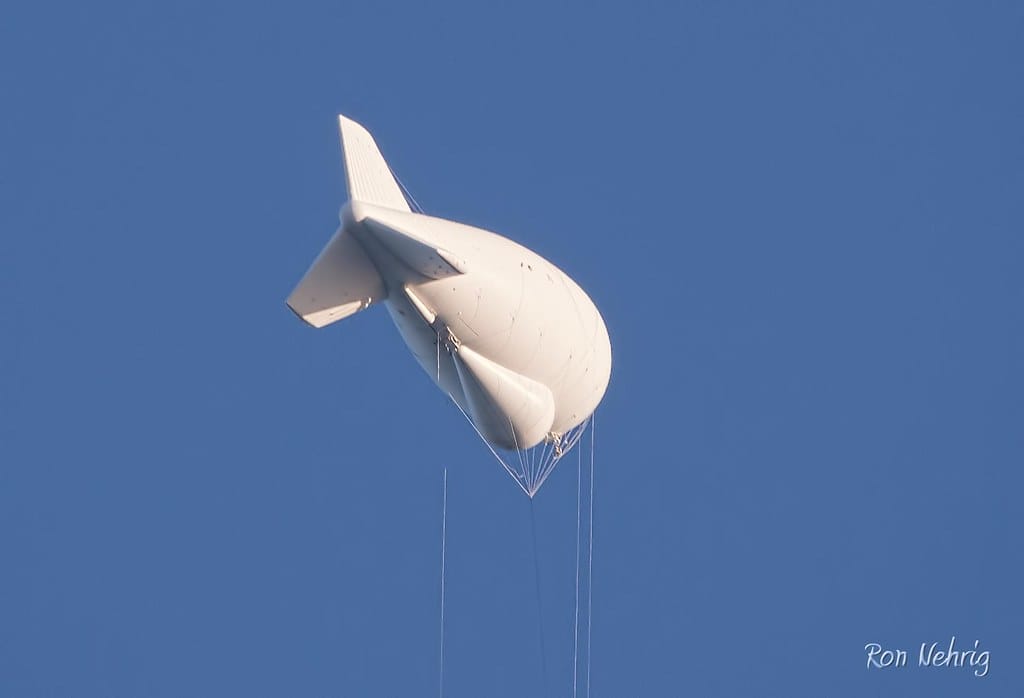
"Fat Albert" over Florida. Photo: Ron Nehrig / Flickr
During routine maintenance, the aerostat broke free from its moorings and slipped out of the ground crew's control. The wind caught it and carried it toward mainland Florida.
Operators managed to activate the remote helium release valve. The aerostat began slowly losing altitude — but it had already drifted past the Florida Keys and out over the wetlands of Everglades National Park.
The aerostat traveled roughly 100 miles before settling into the Everglades swamp. The search operation cost $35,000 and took several days.~100 mitraveled uncontrolled$35Ksearch cost0casualties
The aerostat was found in the swamp — damaged, but with some equipment still intact. The incident highlighted a key advantage of aerostats even in emergencies: the system lands, it doesn't crash. Where a drone would have been destroyed, the aerostat simply came down.
Incident 03 Tether Failure 2015
JLENS: Three Hours of F-16s Chasing a Runaway Aerostat
📍 Aberdeen, Maryland → Pennsylvania, USA · October 28, 2015
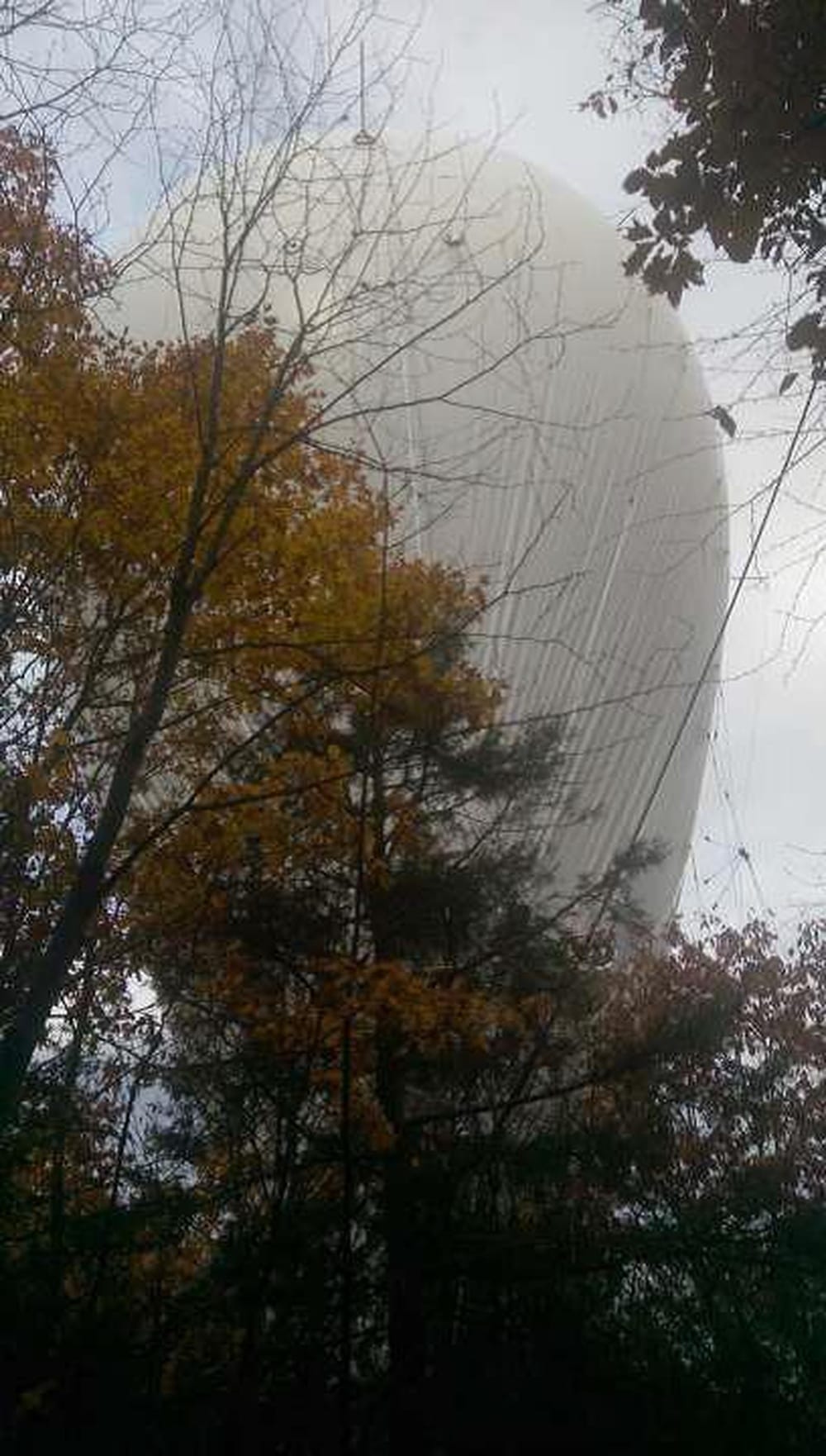
Recovery of the JLENS aerostat after landing in Pennsylvania. Photo: NORAD / DVIDS (public domain)
On October 28, 2015, one of two aerostats in the JLENS (Joint Land Attack Cruise Missile Defense Elevated Netted Sensor System) program — a 240-foot helium giant worth hundreds of millions of dollars — broke free from its moorings at Aberdeen Proving Ground in Maryland.
The aerostat climbed to roughly 16,000 feet and began drifting north toward Pennsylvania. The military scrambled two F-16s from Langley Air Force Base. The interceptors shadowed the balloon for hours — but shooting it down over populated areas was out of the question.
The 6,700-foot tether dragged across the landscape, tearing down power lines and cutting electricity to around 20,000 homes.3 hrsof uncontrolled drift~100 mifrom launch point20,000homes lost power
The aerostat came down in trees near Anthony Township. Pennsylvania State Police deflated the envelope with shotgun rounds before military personnel recovered the sensitive equipment.
An investigation concluded the cause: a faulty pressure sensor in the tail fins caused loss of aerodynamic stability and ultimately snapped the tether. The $2.7 billion JLENS program was cancelled in 2016 — this incident was its final chapter.
Incident 04 Combat Conditions 2024
US Reconnaissance Aerostat ASRR Down in Syria
📍 Rmeilan, Hasakah Province, Syria · May 15, 2024
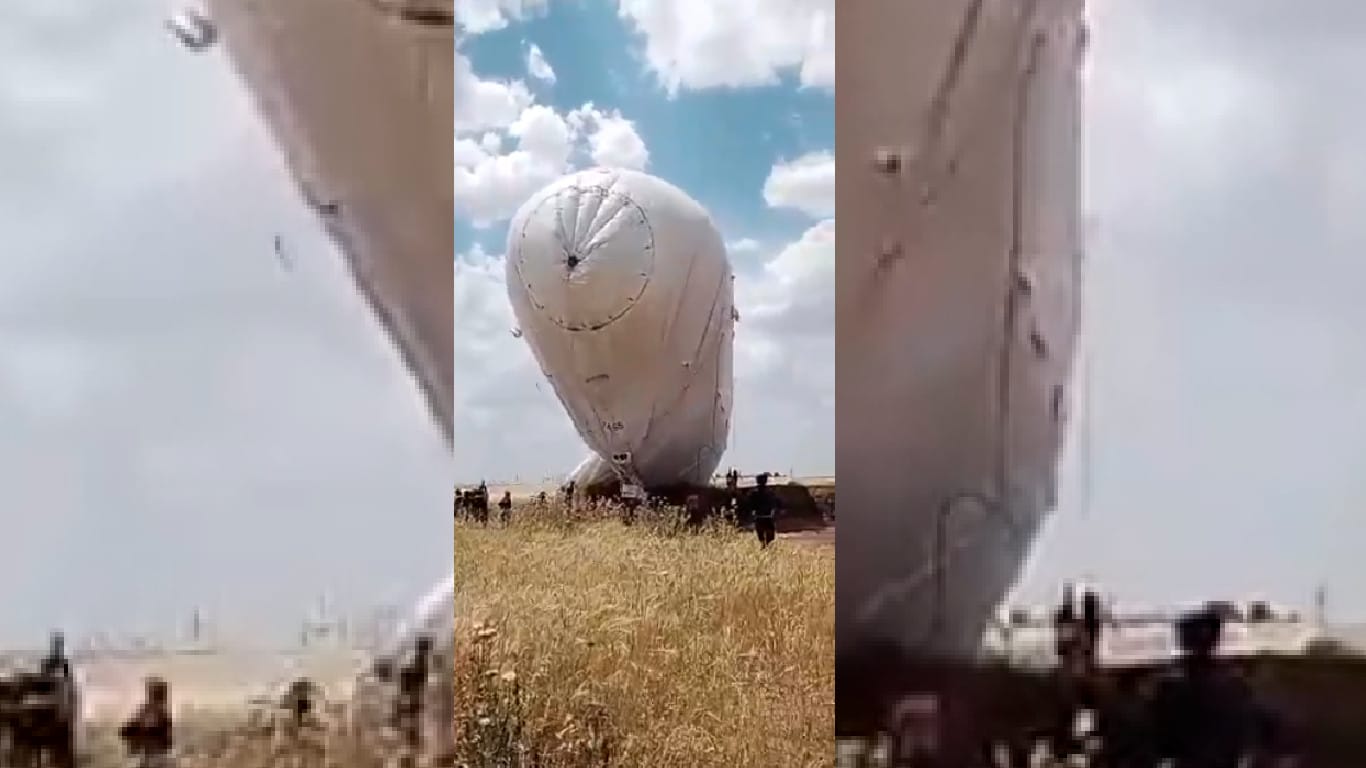
The US ASRR aerostat on the ground near Rmeilan, Hasakah. Photo captured by local residents and shared on social media. Source: Militarnyi
On May 15, 2024, a US military airborne surveillance and reconnaissance aerostat — an ASRR (Airspace and Surface Radar Reconnaissance) — came down near the town of Rmeilan in northeastern Syria. Local residents filmed the system on the ground and shared the footage on social media, from which regional outlets quickly picked it up.
The ASRR is built by Raytheon Intelligence and Space in partnership with Elta North America and Avantus Federal. The system carries radar for scanning both airspace and ground surfaces, along with airborne early warning radar with friend-or-foe identification capability.
Some outlets reported it was shot down. The Pentagon issued no official comment.ASRRsystem typeRaytheonmanufacturer0casualties (no crew aboard)
The incident again underscored one of the defining characteristics of aerostat systems: even when destroyed, there is no crew on board. The ground team keeps working. No pilot, no casualties.
Combat Experience · Aerobavovna
What Actually Happens to Aerostats in a Real War
Cases from the front line, 2022–2024. Not a single system was completely destroyed.
Friendly Fire · Small Arms
128 Bullet Holes — and the Aerostat Just Landed
Several times our aerostats fell victim to friendly fire — friendly units opened fire on an unidentified aerial object. In one of the most severe documented cases, the envelope received 128 punctures: each round passes through both sides, entry and exit, meaning there were 64 actual hits.
The result: the aerostat descended slowly. The payload survived. No casualties. The envelope was repaired or replaced — and the system returned to operations.
Where a drone is destroyed by a single bullet, an aerostat with 64 hits simply comes down.
Over time, these incidents have become far less frequent. Most frontline units now know what an aerostat looks like in the sky. Platform recognition is part of operational safety.
Friendly Fire · FPV Drone"General Chereshnya" vs. Its Own Aerostat
In one case, an aerostat was lost after being struck by an FPV drone. The event looked like an enemy attack — until the details emerged. The drone turned out to be Ukrainian: the "General Chereshnya" FPV strike drone had engaged its own aerostat.
The cause was a lack of coordination between units operating in the same area under conditions of heavy drone traffic. The aerostat was destroyed. The payload was a question of coordination and timely communication — not system design.
Enemy Strikes · Ground Equipment
Molniya and FPV Strikes on Ground Systems: Damaged, Never Destroyed
On several occasions the enemy struck directly at ground equipment — winches, control stations, vehicles. Both FPV drones and guided munitions of the Molniya type were used.
In every case: varying degrees of damage and temporary downtime. But not a single complex was completely destroyed — crews restored operations.
The enemy targets the ground station because hitting an aerostat in the air is harder. That, incidentally, is also an advantage.
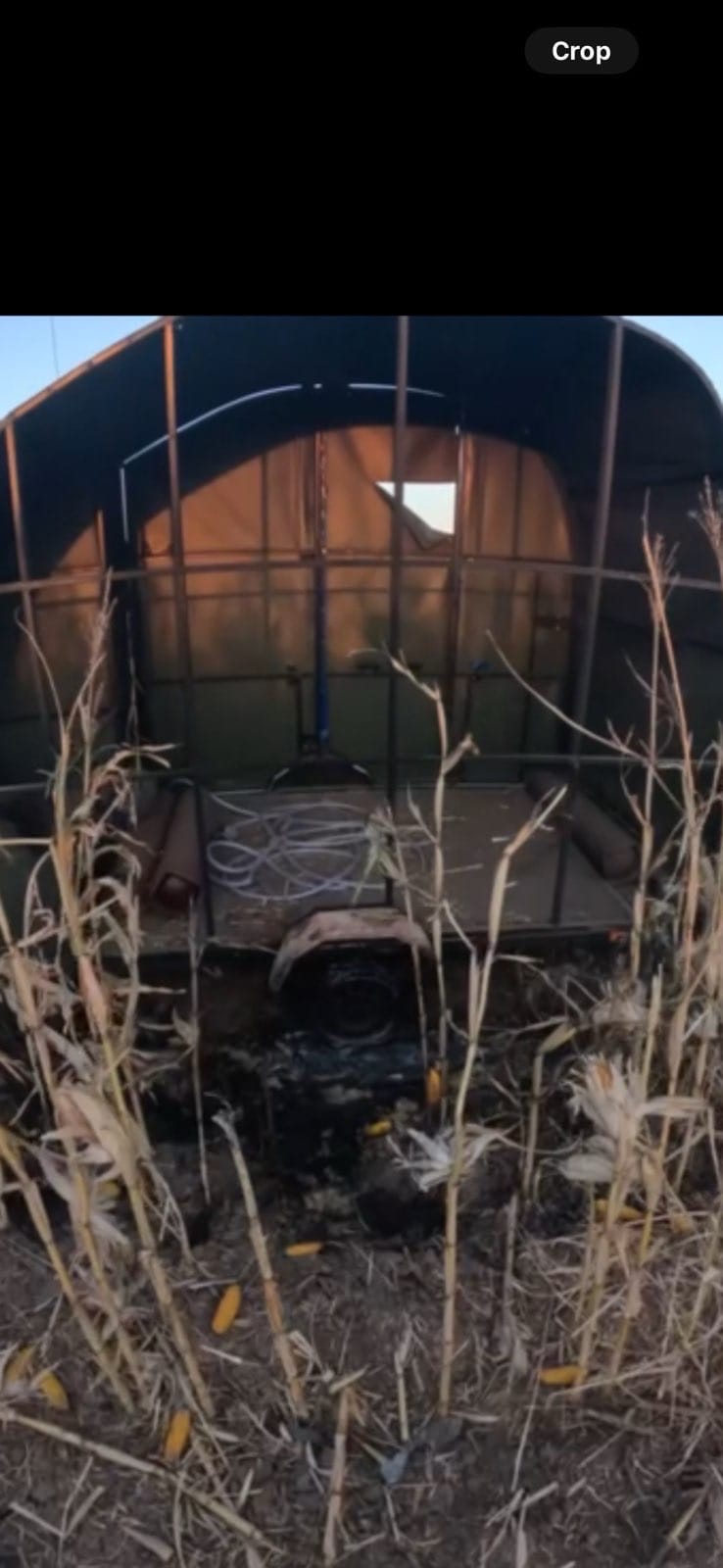
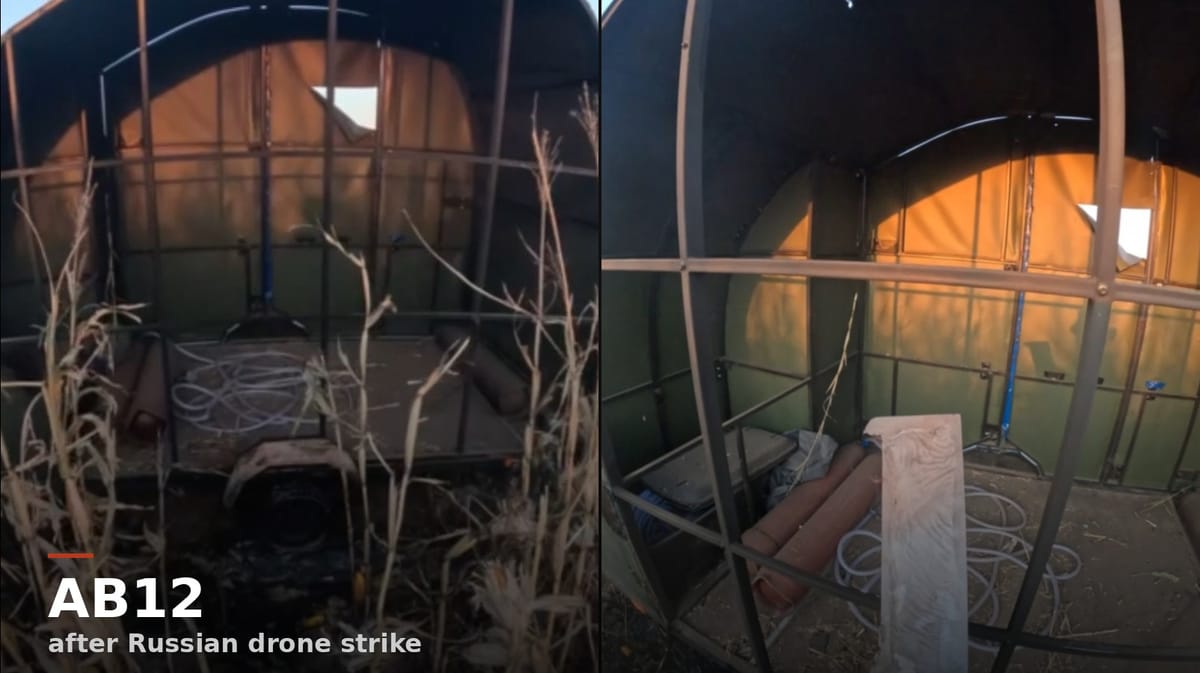
Damaged AB12 complex — interior of the shelter after the strike
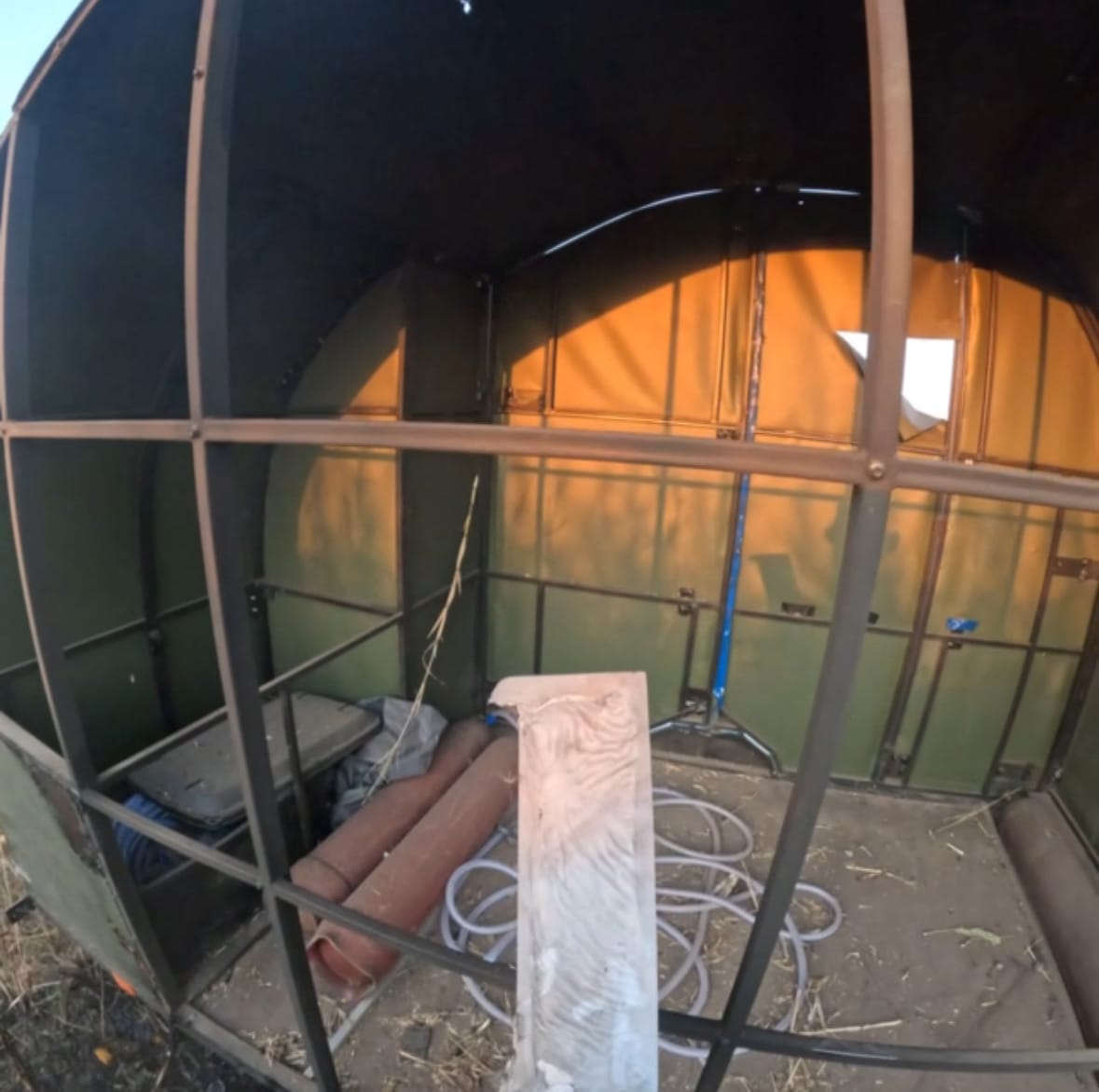
Same complex — exterior view showing thermal damage128punctures from 64 hits in one incident0systems completely destroyed0operator casualties