Tethered: Aerostats in Games

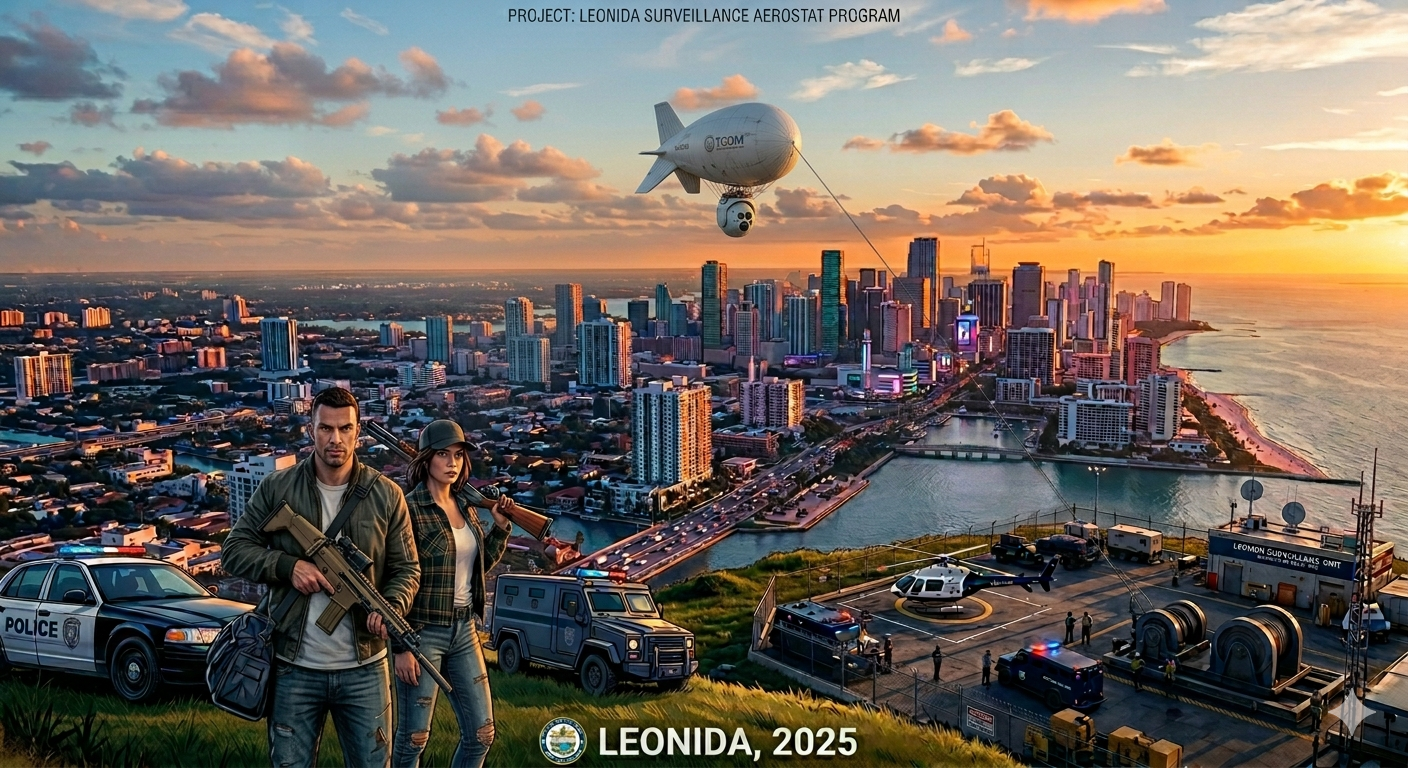
Fiction has understood this for a long time. Military observation balloons appear in the earliest war games. A Ukrainian studio set in the Chornobyl Exclusion Zone put one at the center of its most critical tactical location. And an animated film imagined floating wind farms above a megacity years before any real prototype flew. Below are the most interesting examples — what each one does, and why it's worth knowing about.
01 — The Drachen Kite Balloon
Battlefield 1 · EA DICE · 2016 · Game
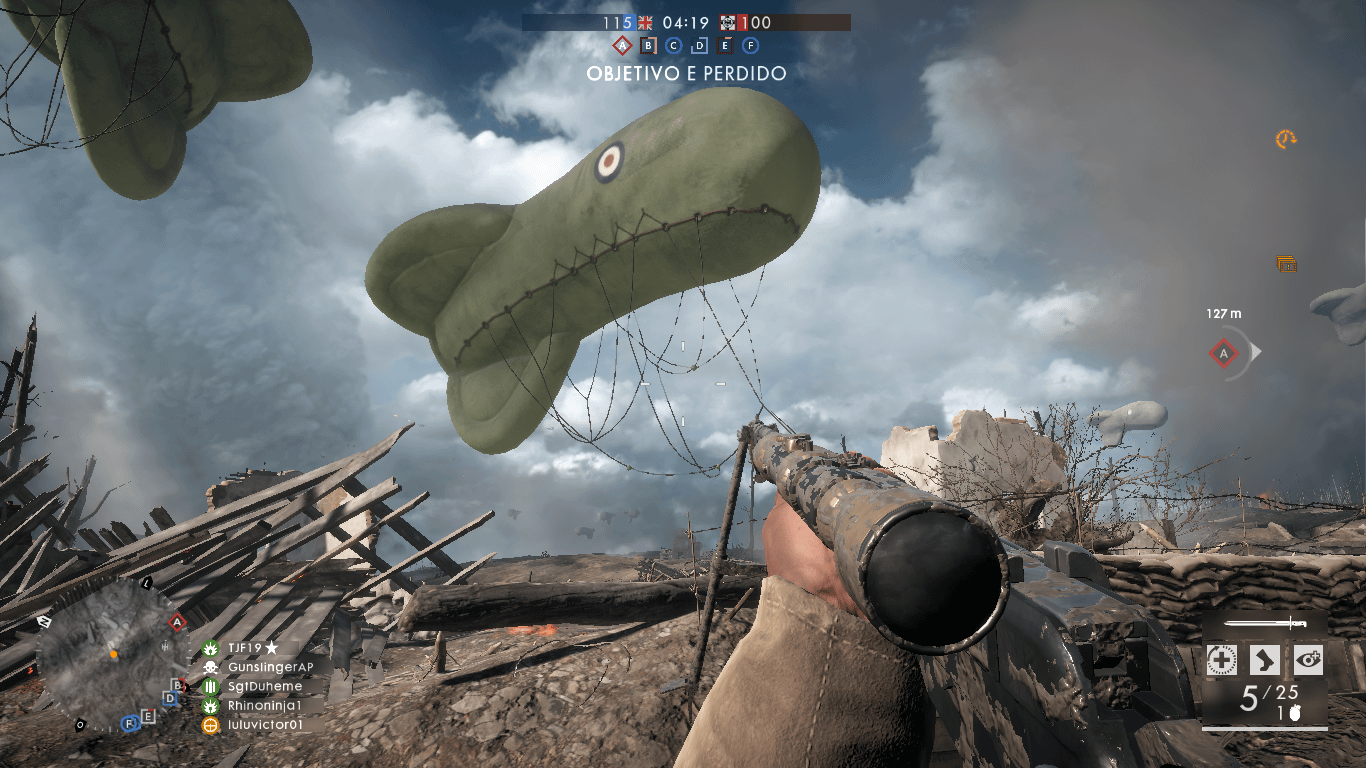
Battlefield 1 is set in WWI and gets the aerostat exactly right. The Drachen — the German kite balloon used for artillery observation — appears as a destructible, capturable tactical objective on several multiplayer maps. It flies tethered at altitude with an observer in the basket. When active, it allows the controlling team to call in accurate artillery strikes. When destroyed, that advantage disappears. Teams fight over it.
This is not a game abstraction. The Drachen was the defining aerostat of WWI — both sides used tethered observation balloons for exactly this purpose, and both sides sent fighter pilots on dedicated "balloon busting" missions to destroy them. The balloon observer had one of the most dangerous jobs in the war. DICE modeled the tactical logic faithfully: the aerostat is a force multiplier, not a weapon. You don't fight with it. You fight for it.
What makes it interesting: The most mechanically accurate depiction of aerostat tactical doctrine in any game. Capture the high ground. Hold the high ground. The balloon isn't a vehicle — it's a resource that changes what every other asset can do.
02 — The Balloon Tower
S.T.A.L.K.E.R. 2: Heart of Chornobyl · GSC Game World (Kyiv) · 2024 · 🇺🇦 Game
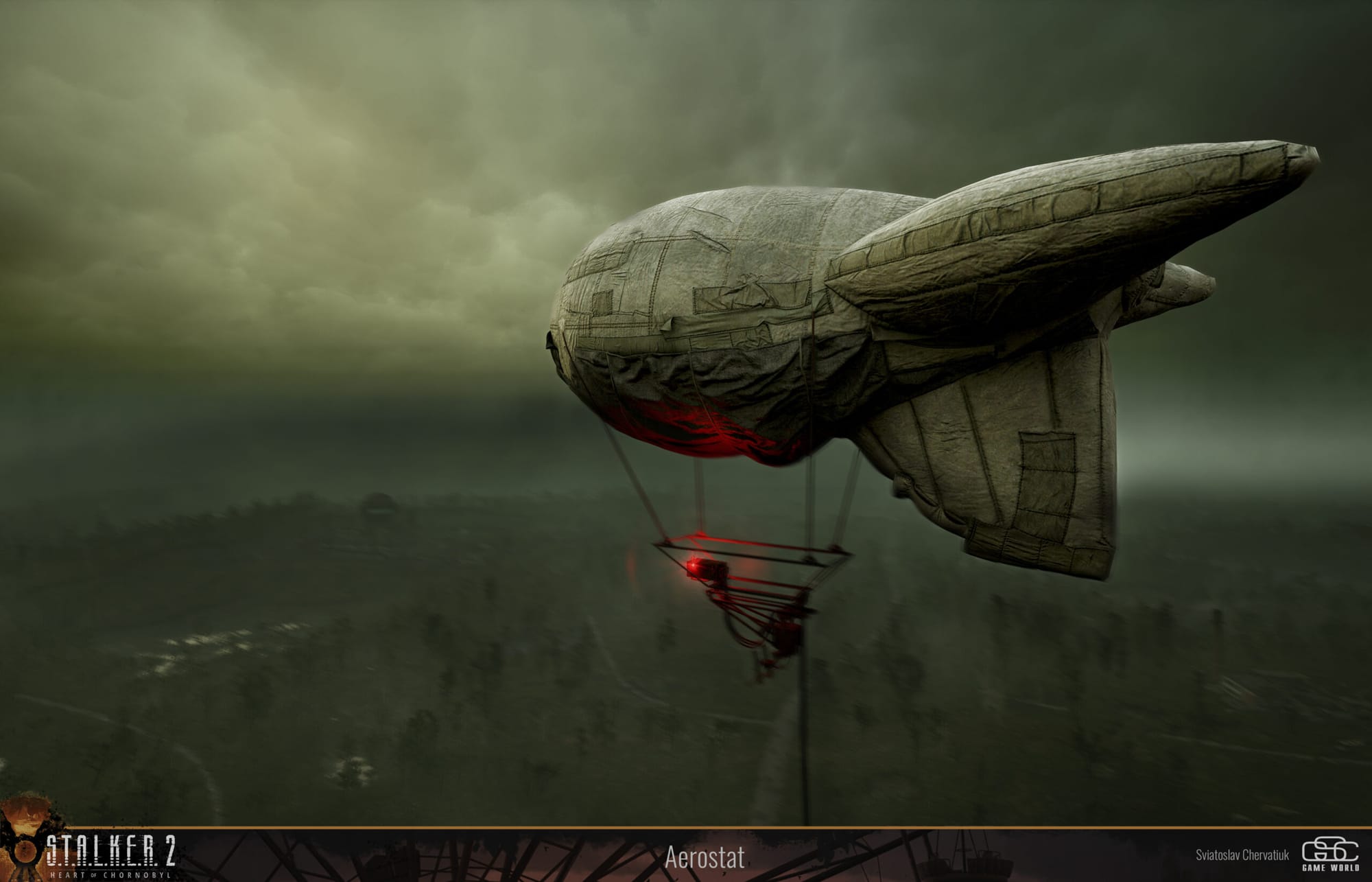
GSC Game World is a Ukrainian studio. Their game is set in the Chornobyl Exclusion Zone — a 30km radius of abandoned Soviet infrastructure, anomalous fields, and contested territory. The Balloon Tower is one of the game's most critical tactical locations: a tethered military aerostat adjacent to the Lesser Zone's main administrative building, serving as the operational headquarters of the Ward faction under Captain Zotov. The tower carries radar equipment and a device central to one of the game's main quest lines.
The choice to anchor a key story location to an aerostat is not random. In the Zone's logic, a tethered balloon at altitude gives the controlling faction something ground-based installations cannot: coverage over terrain that anomalies make impassable on foot. It sees without moving. In a landscape where the ground itself is dangerous, the aerostat's altitude is the only safe vantage point.
The Zone, of course, is a fictional version of a real place. And in the real Exclusion Zone — and in real conflict zones across Ukraine — military observation platforms at altitude serve exactly this function.
What makes it interesting: A Ukrainian studio put a tethered surveillance aerostat at the center of its most contested tactical location, in a game set on Ukrainian territory. The fiction and the present-day military reality are closer here than anywhere else on this list.
03 — Eden's Gate Surveillance Aerostats
Far Cry 5 · Ubisoft · 2018 · Game
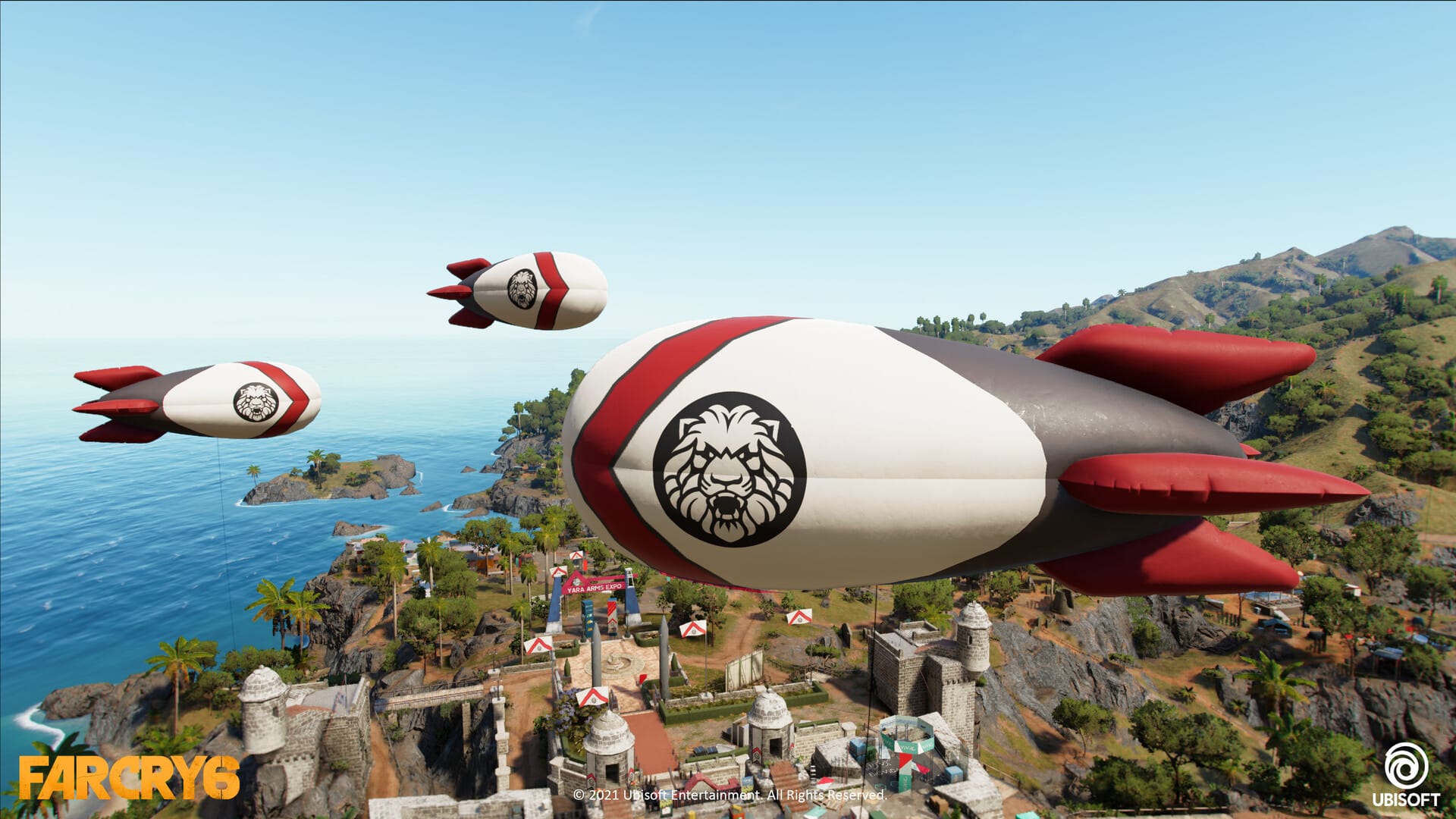
Eden's Gate — the cult that controls Hope County in Far Cry 5 — uses tethered observation aerostats at outposts throughout their territory. The aerostats carry observers who can spot intruders and trigger reinforcement calls. They're not heavily armed. They don't need to be. At altitude, with line of sight over the surrounding terrain, a single observer with a radio is worth more than a dozen guards on the ground.
Ubisoft's design is tactically sound: destroying the aerostat (or eliminating the observer silently) before breaching an outpost removes the early warning system and makes the attack significantly easier. Players learn quickly to look up before moving in. The game quietly teaches the lesson that control of low airspace — even just a few dozen metres of it — changes the ground situation entirely.
What makes it interesting: The aerostat as force multiplier for a low-tech insurgent group. Eden's Gate doesn't need sophisticated sensors. A person at altitude with a radio is enough to make the whole facility harder to take.
04 — San Fransokyo Wind Aerostats
Big Hero 6 · Disney · 2014 · Film

In the background of San Fransokyo's skyline: dozens of tethered aerostats hovering at altitude above the city, each carrying a wind turbine. No tower. No foundation. No land footprint. A balloon, a tether, and a turbine running continuously in the stronger, more consistent winds that exist at altitude. Wind speed doubles at 300 metres compared to ground level. Available power increases by a factor of eight.
In the same year the film released, Altaeros Energies (MIT spinout) completed the first grid-connected deployment of its Buoyant Airborne Turbine at 300 metres altitude in Alaska — a helium aerostat carrying a wind turbine on a tether. The concept worked.
China has gone further. The S2000 Stratosphere Airborne Wind Energy System (SAWES) targets stratospheric altitude where winds are dramatically stronger and more consistent — accessible neither by conventional turbines nor by any other platform. The aerostat is the only viable solution at those altitudes. What Disney put in the San Fransokyo background as world-dressing is a real engineering program.
What makes it interesting: Every other entry on this list uses the aerostat for observation, communication, or control. Big Hero 6 uses it for energy generation — and the real world followed. The S2000 SAWES is the fiction made literal.
The Pattern
Across every entry on this list — from Battlefield 1's WWI kite balloon to Disney's floating wind farms — the tethered aerostat solves the same problem: how do you maintain useful presence at altitude, continuously, without the complexity and cost of powered flight?
The answer is always the same. You use buoyancy. You use a tether. You let the physics do the work. And you stay.
What changes across these examples is only the application: observation, denial of airspace, early warning, energy generation. The concept beneath all of them is identical.
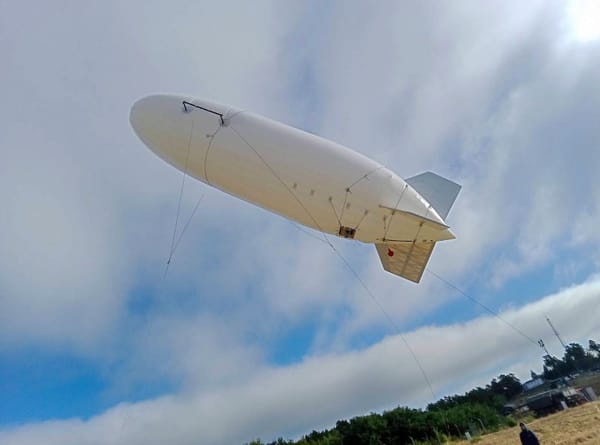
Somewhere in that lineage sits Aerobavovna. A Ukrainian company, building tethered aerostat systems for Ukrainian forces, in an active war where the tactical logic of every entry on this list plays out daily — observation, coverage, contested airspace, the value of altitude held patiently. The aerostats on these pages are fictional. Ours are not. We hope that one day they'll make it into both categories.
The aerostat doesn't move. That's its entire value proposition.