Tethered Aerostats in Emergency Response: Operational Cases
Key takeaways
TL;DR. Tethered aerostats have a proven emergency-response record in three roles: communications restoration, wide-area environmental monitoring, and persistent search-and-rescue. After Hurricane Katrina, a TCOM 17M at 305 m restored a 1,550 km² cellular umbrella for 2,000 subscribers, deployable in 3 hours.
- Three roles: comms restoration, wide-area environmental monitoring, persistent SAR
- Katrina (CAPS, TCOM 17M): 305 m, 90 kg cellular GSM/CDMA payload
- Coverage 1,550 km²; 2,000 simultaneous subscribers; 3 h deployment
- Deepwater Horizon: aerostat at 150 m, thermal camera + X-band radar, 24/7
Tethered aerostats have an established track record in emergency response across three core roles: communications restoration, wide-area environmental monitoring, and persistent search-and-rescue support. Five cases below — including one Aerobavovna deployment.
Hurricane Katrina Aftermath — USA, 2007
Following the communications blackout across Louisiana caused by Hurricane Katrina, the US Army awarded TCOM L.P. a contract for the Cellular Aerostat Platform System (CAPS) in September 2007. A TCOM 17M tactical aerostat was deployed at 305 m altitude carrying a 90 kg cellular transmitter with GSM and CDMA multi-frequency capability.
Coverage: 1,550 km² wireless umbrella
Capacity: 2,000 simultaneous subscribers
Deployment time: 3 hours from 2× 20ft ISO containers
The system became the first federally mandated aerostat communications restoration platform for disaster response in the United States.
Deepwater Horizon Oil Spill — USA, 2010
The Marine Spill Response Corporation (MSRC), the primary Oil Spill Response Organization deployed during the BP Deepwater Horizon spill, operated tethered aerostats for continuous environmental monitoring throughout the response operation.
Altitude: 150 m (from vessel or shore)
Payload: FLIR M-625L thermal camera + Rutter Sigma S-6 X-Band radar
Operation: 24/7 continuous, day and night, under cloud cover
Function: Classify oil as recoverable/non-recoverable, direct boom placement in real time
MSRC maintains aerostat capability as standard equipment to this day.
DHS/CBP Border Operations, Santa Teresa NM — USA, 2024–ongoing
In 2023, the US Department of Homeland Security awarded Altaeros a $99M 5-year IDIQ contract for the ST-Flex Guardian Class aerostat at Santa Teresa, New Mexico — the #1 human smuggling corridor in the El Paso sector. Deployment began September 2024.
Altitude: up to 305 m
Payload: 60 kg modular (EO/IR, LTE/4G/5G, radar, SIGINT)
Coverage radius: 40 km
Wind survival: 150 km/h
SAR results: 980+ rescue operations in FY2024
Year 1 result: Exceeded all mission and operational availability objectives — record for any commercial aerostat deployment
Year 2 contract renewed October 2025.
National Forest Fire Protection Program — Cyprus, 2026
Following repeated major wildfire disasters, the Cypriot government approved Phase 2 of its national fire protection program at the Presidential Palace on 12 May 2026. The €28.5M program explicitly includes two tethered aerostats as the wide-area persistent surveillance component.
Budget: €28.5M (Phase 2)
Aerostats: 2 units
Function: Continuous visual coverage of forests and high-risk zones
System: Combined with 31 AI thermal sensors, drone groups, MANET network, mobile command centers, and fire spread modeling software
Cyprus is the first Mediterranean government to formally procure aerostats as part of a national civil protection program.
Chornobyl Exclusion Zone Wildfires — Ukraine, 2025–ongoing
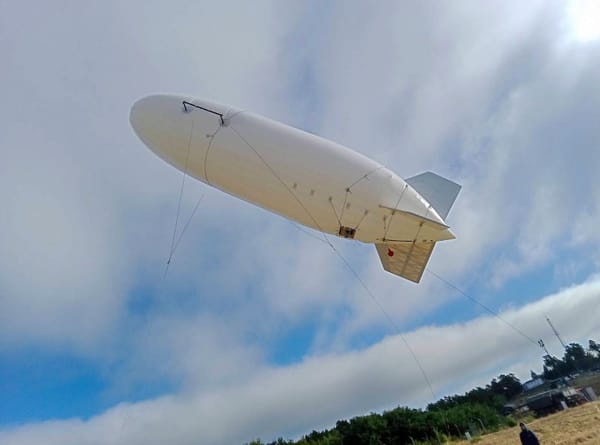
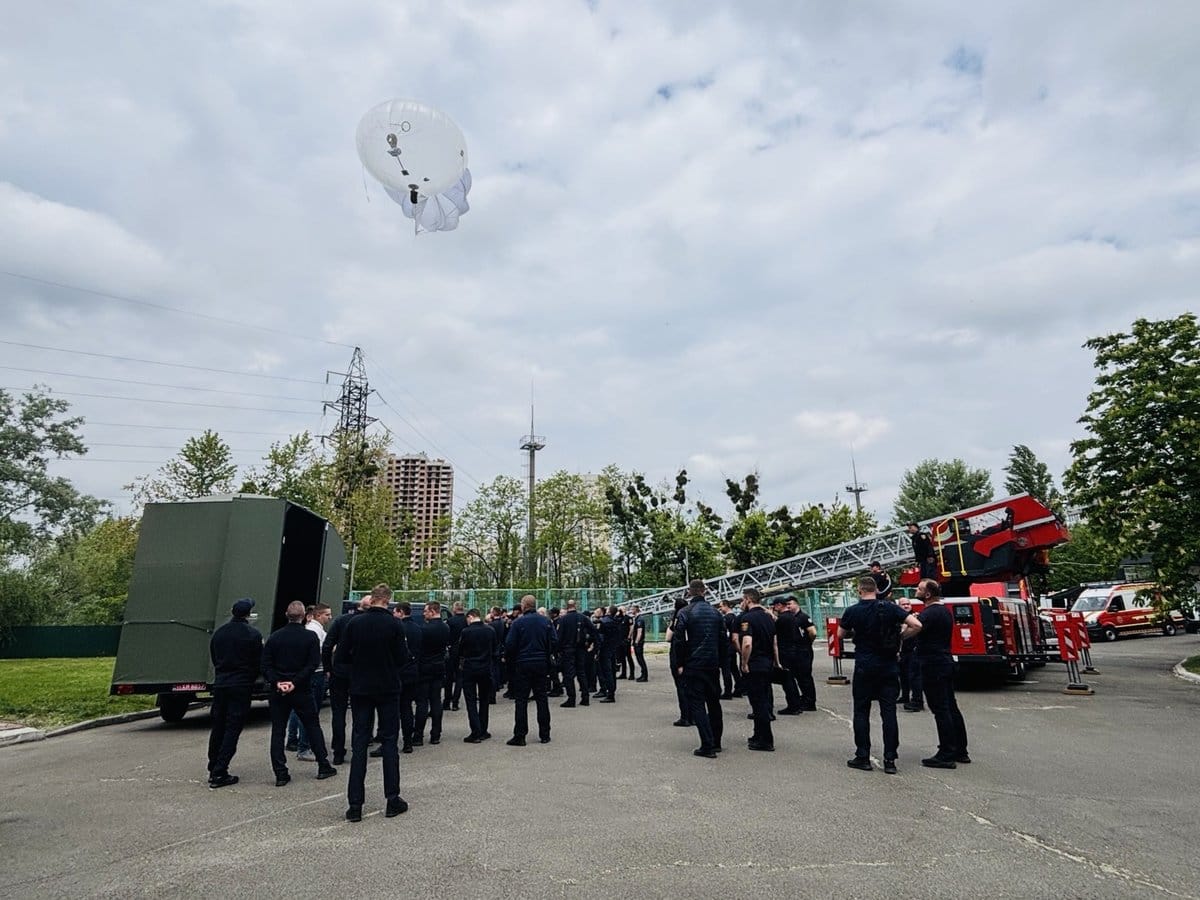
The Chornobyl Exclusion Zone covers approximately 2,600 km². Seasonal wildfires can affect up to 670 km² of the zone, while firefighters and emergency teams regularly lose radio communication coverage in extreme terrain conditions. The State Emergency Service of Ukraine (ДСНС) deployed the Aerobavovna AB12TC tethered aerostat system as a communications platform during wildfire response operations.
Platform: Aerobavovna AB12TC
Altitude: 500 m
Payload: SLR1000 radio repeater
Coverage: up to 20,000 km², communication radius up to 80 km
Client: State Emergency Service of Ukraine (ДСНС)
Context: Active wildfire response in the Chornobyl Exclusion Zone
A single AB12TC system at 500 m altitude provides uninterrupted radio relay across the entire exclusion zone and well beyond its perimeter — eliminating the dead zones that ground-based infrastructure cannot reach in this terrain.
What These Cases Have in Common
Each deployment shares one operational requirement: persistent elevated coverage of a large area, maintained continuously, independently of ground infrastructure. In all five cases, the aerostat was not a backup option — it was the primary platform for the mission.
FAQ
What are tethered aerostats used for in emergency response?
Three core roles — communications restoration, wide-area environmental monitoring, and persistent search-and-rescue support.
What did aerostats do after Hurricane Katrina?
A TCOM 17M aerostat at 305 m carried a 90 kg cellular payload (GSM/CDMA), restoring a 1,550 km² wireless umbrella for 2,000 simultaneous subscribers, deployable in 3 hours.