The U.S. Army Keeps Buying Surveillance Aerostats. We're Building Connectivity for Contested Areas.
The U.S. Army just renewed its tethered-aerostat surveillance program through 2031. It confirms the category is here to stay — and it draws a clean line between what legacy aerostats are for and what we are building.

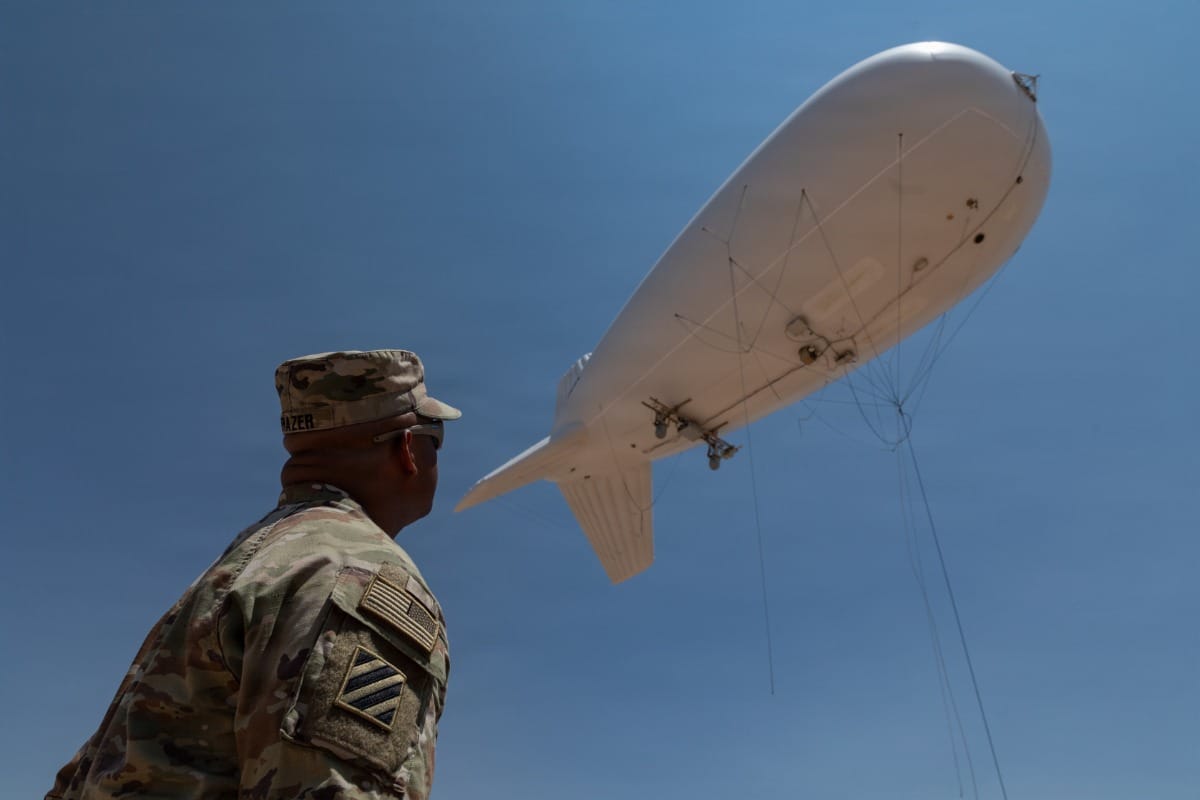
The U.S. Army has committed up to $447M to keep its Persistent Surveillance Systems‑Tethered (PSS‑T) aerostat fleet flying through 2031. TCOM will handle production, fielding and sustainment under an indefinite-delivery contract that runs to July 2031. (A footnote worth one line: of ten firms solicited, only two bid — the strategic-aerostat supplier base is small and getting smaller.)
The number is not the interesting part. The mission is.
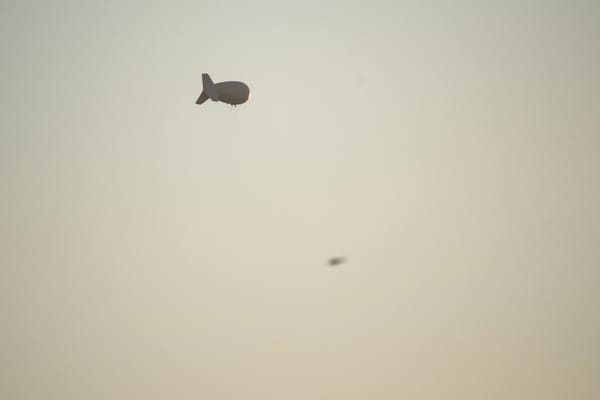
But look at what the Army is actually buying: a large, static, strategic platform built to watch a fixed base or border for weeks at a time. It is the surveillance paradigm that proved itself over Iraq, Afghanistan and the southern U.S. border — a permissive-environment, homeland-and-base mission. Big envelope, heavy mooring, fixed site.
That is not the problem we are solving.
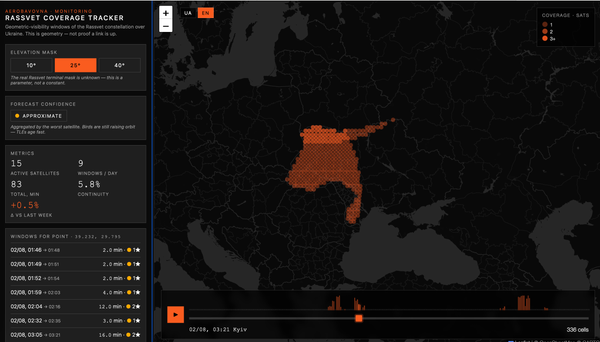
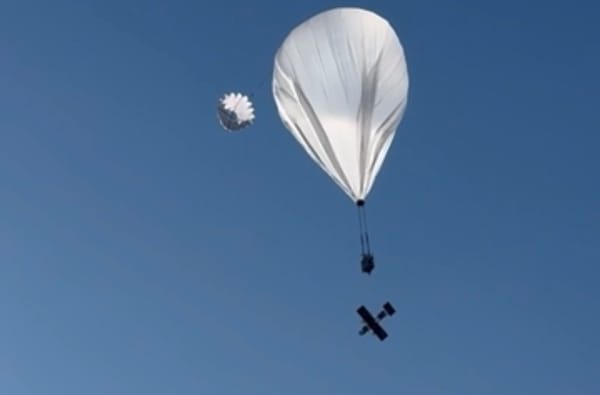
Our focus is elevated connectivity in contested areas — lifting antennas and holding a secure relay link alive for days over ground where the spectrum is jammed, degraded and fought over. Not watching a fixed point from a fixed site, but keeping a network standing where the fight is moving and the enemy is trying to take that network down. That changes everything about the platform: it has to be mobile, deployable fast, survivable enough that losing one is not a strategic loss, and priced for the hour of coverage rather than the decade of sustainment.
Both bets can be right at the same time. A strategic surveillance aerostat over a home base and a mobile connectivity aerostat over a contested front are simply different tools for different wars. The U.S. contract is a clear signal of the first. What we see every day in Ukraine is demand for the second — and that is the one we are built for.