Erbil Update: The TARS Aerostat Was Destroyed on 2 September
Six weeks after the ground facility was burnt out, an IRGC drone and missile attack took the U.S. TARS over Erbil out of the air. Two hits on one fixed site.

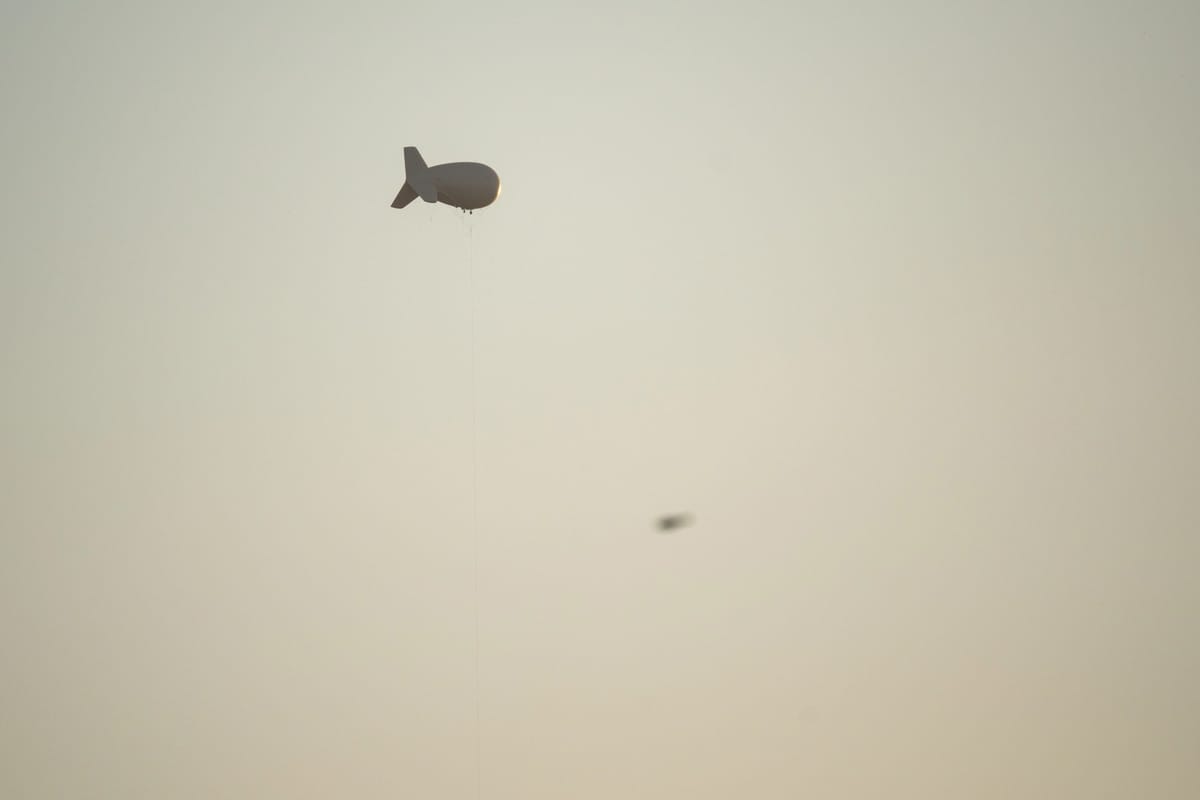
On 22 July we wrote about satellite imagery of the U.S. aerostat support facility at the Erbil base: the ground installation was burnt out, the aerostat itself still visible nearby. Six weeks later the aerostat is gone.
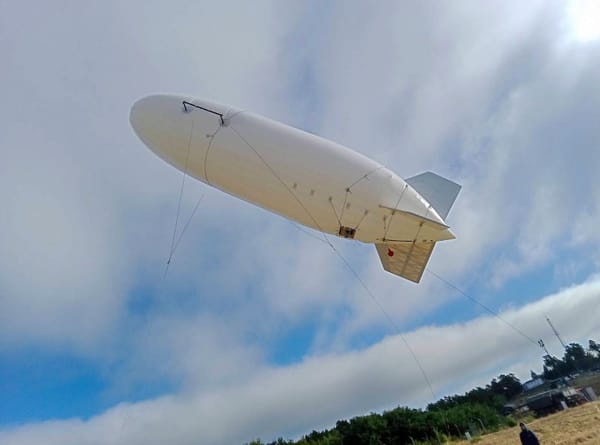
According to Rudaw English, two Kurdish security sources said the Tethered Aerostat Radar System (TARS) over Erbil was struck and destroyed in the early hours of Wednesday, 2 September 2026, during an IRGC drone and missile attack on the U.S. base at Erbil International Airport. The aerostat, which had been a fixture of the Erbil skyline, was not in the air on Wednesday morning.
The IRGC statement lists what it says was hit at the base: a maintenance facility, warehouses with technical equipment, fuel storage tanks, and "the system used to guide a US surveillance balloon". The Kurdish sources describe the aerostat itself as destroyed; the IRGC describes the ground control system. Either way, the platform is no longer flying.
The strike was part of a wider exchange: U.S. Central Command hit more than 100 targets in southern Iran overnight (per Axios), and Iran fired missile salvos at U.S. forces in Jordan, Bahrain, the UAE and Kuwait. Rudaw notes the Kurdistan Region has been targeted by hundreds of drones and missiles since late February.
What the two strikes show together
The July imagery and the September strike are two hits on the same site, weeks apart. After the first one the aerostat stayed up, presumably with degraded ground support. The second one took the platform out.
This is consistent with what we described in July. A large tethered aerostat over a fixed, publicly known site has a ground signature (winch, mooring, helium, power, maintenance buildings) that can be hit independently of the envelope, and an envelope that can be hit independently of the ground signature. Both were struck in Erbil. A second attempt at a known site does not require new reconnaissance.
The cost asymmetry is the same as before: a one-way attack drone against a system whose replacement, with the radar, runs into hundreds of millions of dollars and months of lead time.
What we take from it
Our own work goes the other way from a single large platform. In Ukraine we operate small tethered aerostats (5–25 kg payload, 500–1,000 m altitude, deployable in 7–60 minutes) carrying communications relay and antenna payloads, spread across many positions rather than concentrated on one. A single node lost is replaced from stock; the network keeps working.
Erbil is a data point on how a fixed, high-value aerostat fares under repeated drone attack. We will keep tracking it.
Previous post: Big Radar Aerostats Have Become Too Easy to Kill (22 July 2026). Source: Rudaw English, 2 September 2026.