Big Radar Aerostats Have Become Too Easy to Kill
A cheap drone or missile was enough to knock out a strategic radar aerostat — and it has now happened twice. The lesson isn't "build a tougher big aerostat" — it's the opposite.

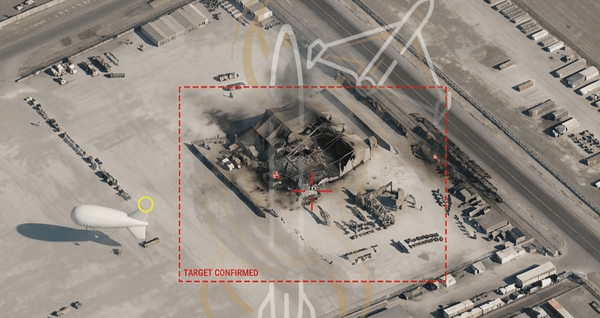
The image is fresh — it surfaced today: satellite imagery of a U.S. aerostat support facility at the Erbil base reduced to a burnt-out footprint, with the aerostat still visible nearby. Put it next to Israel's Sky Dew, hit months earlier, and the two say the same thing: a large, high-value aerostat turns out to be strikingly easy to destroy. The lesson isn't "build a tougher big aerostat." It's the opposite.
Two hits, same message.
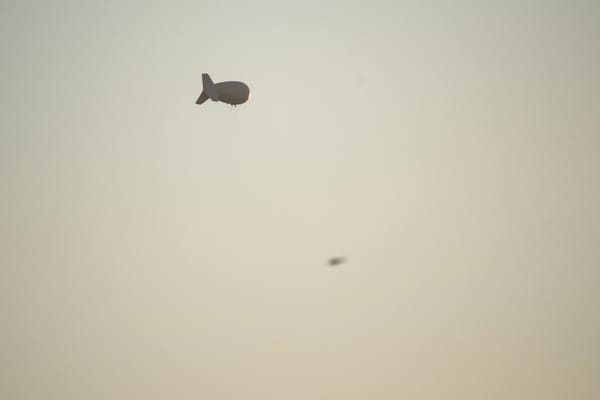
In Israel, the Sky Dew aerostat — a large tethered platform carrying an Elta radar able to detect targets out to roughly 250 km — was reportedly struck by a Hezbollah one-way attack drone. Israeli media reported the system was taken out of action, and that the military was weighing whether to keep the program flying at all. A strategic early-warning asset, degraded by a single cheap drone.
In Iraq, Iranian outlet Fars published the satellite imagery it says shows damage to a U.S. aerostat support facility at the Erbil base — part of the broader wave of strikes that, by The Washington Post's count, damaged or destroyed 228+ structures and pieces of equipment across 15 mostly-U.S. sites in the region. The aerostat's ground installation was in the target set, not an afterthought.
Neither event is a fluke. They're the predictable result of what a large aerostat is.
Why the big aerostat is easy to kill.
A large early-warning aerostat concentrates enormous value into a target with almost every disadvantage you can list:
It doesn't move. The platform sits on a tether over a fixed, surveyed, publicly-known site. Its support infrastructure — winch, mooring, power, helium — is a large, immovable ground signature.
It's a single point of failure. One platform carries the whole capability. Lose it and the early-warning picture goes dark until a replacement — which costs tens of millions and takes months to field — is back up.
The exchange ratio is brutal. A one-way attack drone or a short-range missile costs a small fraction of what it kills. In a war of that math, the big aerostat is exactly the kind of target a cheap munition can take out, precisely because it is so valuable and so hard to hide.
The doctrine this breaks — and the one that replaces it.
The large-aerostat model is a concentration bet: put the best possible sensor as high as possible on one exquisite platform. That bet made sense when the threat was manned aircraft and cruise missiles and the airspace was permissive. Cheap, precise, mass-produced drones broke the assumption. When the thing that kills your platform costs less than the fuel to fly it, concentration stops being efficiency and becomes fragility.
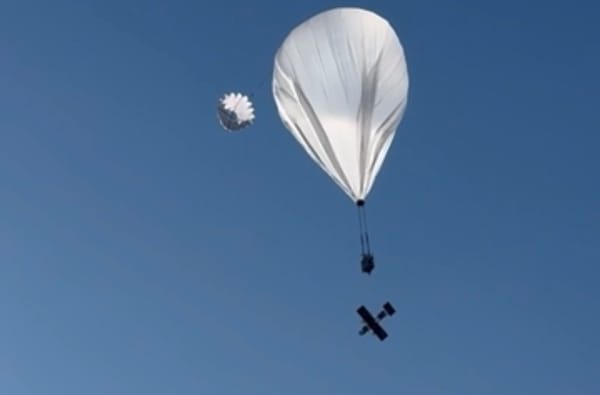
The replacement is distribution. Instead of one platform carrying a 250 km radar, field many small aerostats carrying smaller sensors and radios, spread across the front. The individual node sees or relays less. The network sees and relays more — and, critically, losing any one node changes nothing. There's no single high-value target worth spending a drone on, because there's no single node whose loss matters. Attrition-tolerance replaces capability-concentration.
Where this leaves us.
This is the direction we're building toward. In Ukraine we're already testing small radar payloads — measured in tens of kilograms, against the hundreds of kilograms these large early-warning systems carry — on smaller, more mobile aerostats instead of one exquisite platform over a fixed site. The radar is what dominates the cost; the aerostat under it is a small fraction of the price and quick to replace, so losing one node is a non-event instead of a capability gap. We can't share the details yet, but we expect to soon.
The big aerostat isn't obsolete because it stopped working. It's obsolete because the war changed around it. When a single drone can end your flagship platform, the winning move is to stop having a flagship.